✍️ How to Write a Novel That Actually Works: Structure, Story, and Creative Process

✍️ How to Write a Novel That Actually Works: Structure, Story, and Creative Process
📌 One-Sentence Summary
Writing a novel isn’t about following a perfect system; it’s about finding the one that works for your story.
🔑 Key Takeaways
✍️ Strong novels emerge from clarity, not complexity.
✍️ Structure is something you find, not force.
✍️ Character decisions drive more than plot mechanics.
✍️ Breakthrough moments often come late in the process.
✍️ Constraints (not freedom) create the most powerful ideas.
✨ Intro
This blog post explores how strong novels emerge through discovery, structure, character intelligence, and creative process rather than rigid formulas alone.
Also, through the lens of Agency Focus, this post explores the choices writers make under creative and professional pressure, asking how responsibility functions when certainty is impossible.
Table of Contents
💡 Definitions
Audience
This post is written primarily for:
→ Readers
Primary Focus
The main conceptual focus of this post is:
→ Agency
Secondary Focus
The secondary focus of this post is:
→ Perception
Systems Focus
Posts under Systems explore institutions, technologies, structures, and incentives that shape human behavior and outcomes.
Perception Focus
Posts under Perception examine interpretation, belief, bias, and the stories we tell ourselves about the world.
Agency Focus
Posts under Agency investigate choice, responsibility, autonomy, and the power to act within real constraints.

→ Image by: Aaron Burden on Unsplash
→ FaulknerFiction takes pride in supporting other Creatives!
1️⃣ Why Writing Feels Messier Than Advice Suggests
🤔 What is it?
Most writing advice presents storytelling as clean, sequential, and predictable.
Real writing is often fragmented, nonlinear, and uncertain.
Writers frequently discover important aspects of story, structure, and character only after drafting has already begun.

Why does writing a novel often feel chaotic?

Because storytelling is partly discovery. Many essential story elements only become visible during the act of writing itself.
🎯 Why it matters
This realization removes unrealistic expectations and helps writers trust the creative process instead of constantly feeling like they are failing.
📌 Example
A character originally intended as secondary becomes emotionally central halfway through writing the rough draft.
🤔 How to Apply It
Allow early drafts to explore rather than expecting them to be immediately perfect.
💬 Memorable Quote
Real writing rarely arrives in clean sequence.
🎓 Expert Perspectives
Title: Story Genius
Author: Lisa Cron
Why You Should Read It: It explains why the creative process is rarely linear and why discovery often looks like confusion before clarity emerges. Cron argues that uncertainty is not a sign of failure but a necessary part of building a meaningful story.
Title: The Anatomy of Story
Author: John Truby
Why You Should Read It: Truby emphasizes that story development is iterative and that many writers struggle because story elements reveal themselves over time rather than appearing fully formed.
Title: How to Finish Your Book in Three Drafts
Author: Jane Friedman
Why You Should Read It: It shows why first drafts are naturally chaotic and why trying to perfect everything at once often causes writer's block.
The messy reality of writing leads many authors to search for certainty.
That's usually when structure enters the conversation.
Unfortunately, structure is often presented as a rigid blueprint that must be followed from page one. In practice, most successful novels don't emerge from forcing a predetermined shape onto a story. They emerge from discovering the shape that was already hidden inside the characters, conflicts, and themes.
Understanding that distinction changes everything about how we approach story structure.
→ Image by: Alain Pham on Unsplash
→ FaulknerFiction takes pride in supporting other Creatives!
2️⃣ Story Structure: Found, Not Forced
🤔 What is it?
Strong story structure often emerges through revision and discovery rather than rigid outlining alone.
Structure is less about forcing events into formulas and more about recognizing meaningful narrative relationships after exploration.
Can story structure be discovered instead of planned?
Yes. Many writers uncover their strongest structural decisions only after seeing how characters, themes, and conflicts naturally evolve.
𓂃✍︎ From My Desk: Story Structure
It's important to distinguish a system (maybe think of it as a habit) from a formula.
Many writing coaches have excellent advice on aspects of writing a novel.
What you don't want to do is take the first writing coach you read and assume that that advice is the only advice you need.
Advice can help.
But you have to write your novel!
Think of the most beautiful human being you know.
Would they be that beautiful if they had no skeleton?
The skeleton is a complex coordination of bones that work perfectly together. You have to create the skeleton first to hang the beauty on top of. And where does the information about creating your story's skeleton come from?
From the advice of people who have done it and know a lot about it.
Rather than taking any one of these experts, and only using their system, you should read them all, and everything you can, about your craft.
You don't have to do this before you begin.
You certainly don't have to do this overnight.
In fact, the best method might be to do the writing, and in the evening, read one of these books to better understand your craft.
But you should always be learning about your craft!
Here are some of my favorite writing coaches:
⏩ The Story Genius by Lisa Cron
⏩ The Storygrid by Shawn Coyne
⏩ Story by Robert McKee
⏩ Scene and Structure by Jack Bickham
⏩ The Creative Act by Rick Ruben
🛠️ Writing Approaches — How They Work (and Why They Matter)
Most writers rely on one approach. But stronger stories emerge when you understand how you czn use many of them and how they all work together!
| Writing Approach | Outcome | Key Insight |
|---|---|---|
| Over-Planning | Early clarity but limited discovery | Too much structure too soon can limit originality |
| Discovery Writing | Organic but sometimes unfocused | Exploration often reveals stronger ideas |
| Character-Driven Writing | Stronger emotional engagement | Characters create meaning beyond plot |
| Structure-First Writing | Organized but potentially rigid | Structure works best after exploration |
| Integrated Process | Balanced storytelling | Strong fiction combines multiple approaches |
📌 Example
A subplot initially written spontaneously later becomes the emotional spine of the novel.
🤔 How to Apply It
Outline after discovery, not only before.
If You're Enjoying This Article...
📖 The Headhunter - Explores how suspense structure emerges from character conflict.
💬 Memorable Quote
Structure appears when discovery becomes understanding.
🎓 Expert Perspectives
Title: Second Draft: Your Path to a Powerful, Publishable Story
Author: Allison K. Williams (via Jane Friedman)
Why You Should Read It: It explains the distinction between story, plot, and structure and how structure often becomes visible during revision.
Once writers stop treating structure as a formula, a more important question emerges. What actually creates structure in the first place?
The answer isn't usually found in plot twists, chase scenes, or dramatic reveals.
Strong stories gain their shape because characters pursue goals, make choices, and struggle against their own limitations.
Plot may create movement, but character creates meaning.
That's why readers often remember people long after they've forgotten specific events.

→ Image by: Jens Lelie on Unsplash
→ FaulknerFiction takes pride in supporting other Creatives!
3️⃣ Why Characters Solve Problems Plot Cannot
🤔 What is it?
Readers emotionally engage with choices, contradictions, desires, and flaws more than plot mechanics alone.
But for that to happen, you're characters have to seem real.
Why are characters often more important than plot?
Because emotional investment comes from people, not events alone.
🎯 Why it matters
Strong characters create momentum, tension, and meaning naturally.
Imagine if the character Hamlet got a new car.
What would it be and why?
Now, imagine if Michael J. Fox got a new car.
What would it be and why?
You can take the same situation, present it to two different characters, and the results will be vastly different. But that doesn't make character more important than plot. It makes character and plot inseparable! Work on both at the same time. Ask yourself, what would my character do in this situation?
You'll quickly see that the plot has many ways to move forward, based on that decision.
What would be the perfect understandable decision, but slight unexpected?
Which way do you want to take it next?
Novel Noir
Why It Fits This Blog Post
This blog post encourages readers to identify the storytelling elements they enjoy most. Novel Noir is an excellent recommendation for readers who appreciate psychological suspense, layered characters, and morally complex mysteries.
📌 Example
A simple conversation scene becomes powerful because of emotional stakes rather than external action. Especially if that conversation result in something that can't be undone.
🤔 How to Apply It
Focus on motivation before spectacle.
💬 Memorable Quote
Plot moves because people choose.
🎓 Expert Perspectives
Title: Starting Your Novel With Character
Author: Susan DeFreitas
Why You Should Read It: It explains why readers connect with character transformation and emotional perspective more deeply than plot mechanics alone.
If character drives story, then an uncomfortable truth follows. Writers cannot always know their characters as well as they think they do when they begin.
Many of the most important discoveries happen during the act of writing itself. This is where drafting becomes something more than putting words on a page.
It becomes a process of exploration.
The first draft is often less about creating a finished novel and more about uncovering the story that has been hiding beneath the original idea.

→ Image by: Nick Fewings on Unsplash
→ FaulknerFiction takes pride in supporting other Creatives!
4️⃣ The Difference Between Drafting and Discovering
🤔 What is it?
Drafting generates material.
Revision identifies what truly matters.
Why is revision so important?
Because revision transforms raw material into coherent storytelling.
🎯 Why it matters
Revision is often recognition, not correction.
Writers should never treat first drafts like final judgment.
Why?
⏩ You may eventually have to remove a character altogether.
⏩ You may have to tie two characters together to accomplish something.
⏩ You may need to go back and add a characteristic to a character so the current actions seem more believable.
Every main plot has the possibilities for numerous subplots that can enhance the points you're making in the main plot.
If you start writing without any plans whatsoever, you'll end up with a pile of words you don't know what to do with.
This is what causes many writers to quit.
What Are the Odds that You'll Actually Finish Writing a Novel?
The statistics are staggering.
Don't fall into that trap!
Start with a general outline and some general character traits.
Think about the story you want to write.
What characters would naturally be in that situation?
If it's a mystery, you'll probably need some version of a detective.
If you're James Bond, you're good at your job. But you'll need a more stable and logical boss.
Take these tired possibilities and turn them into something creative and new.
It's going to be a big help to you if you're already well-read in the genre that you're writing in.
Why?
You may think you're coming up with something entirely brand new, when in reality, many other writers have written a book using those same ideas!
You don't want to finish your novel, only to find that an agent says that's been done so many times before that no one will buy that book.
This is why you need to learn your craft.
And study your industry.
Not to find a new trend to jump on, but to find out if your idea has already been done a million times before.
Personally, finding this out after you've finised writing your novel would be the most horrible discovery I can imagine!
If You're Enjoying This Article...
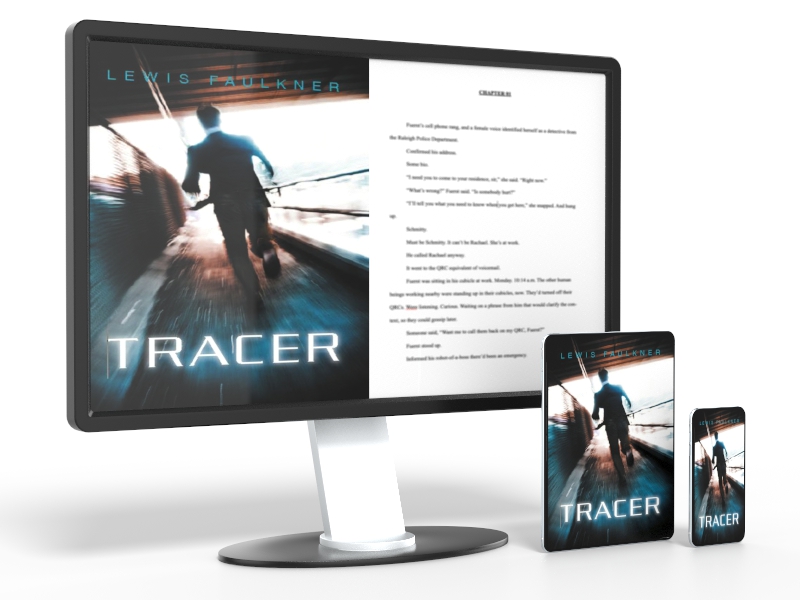
📖 Tracer -This novel show how revisions strengthened the story.
📌 Example
Entire themes only become visible after completing the draft.
🤔 How to Apply It
Treat revision as refinement, not punishment.
💬 Memorable Quote
Revision is often recognition, not correction.
🎓 Expert Perspectives
Title: Second Draft
Author: Allison K. Williams
Why You Should Read It: It focuses on how revision transforms raw material into a coherent story structure.
And by the way, discovery doesn't stop when a writer finally understands the story.
In many ways, that's when the deeper work begins.
Novelists often start a project believing they are writing about one thing only to realize months later they have been wrestling with entirely different questions.
Every significant story leaves a mark on its creator.
The longer we write, the more we discover that novels are not merely products we create.
They are experiences that change us in the process!

→ Image by: moerwijk on Unsplash
→ FaulknerFiction takes pride in supporting other Creatives!
5️⃣ What Writing Teaches the Writer
🤔 What is it?
Long-form storytelling changes how writers think, observe, and understand human behavior.
What does writing a novel ultimately teach?
Patience, observation, emotional understanding, and creative resilience.
🎯 Why it matters
Writing is more than producing widgets.
It becomes transformation for the person writing.
Finishing something as large as a novel will give you a boost of confidence to start the next project.
In the meantime, by studying, working hard, and reading up on your craft, you'll be getting better and better at what you do.
This confidence and knowledge will allow you to express yourself in amazing ways.
And eventually, all that skill and practice and knowledge will come together to astound a world of readers who are eager for your work!
📌 Example
The writer changes alongside the story.
🤔 How to Apply It
Allow the process itself to shape your perspective as a writer.
💬 Memorable Quote
Every finished story changes its author.
Taken together, all these lessons reveal a common thread.
Writing a novel is not about mastering a formula or checking off a list of structural requirements. It is about learning to listen closely to the story, the characters, and the questions that matter most.
🎉 Structure emerges from meaning.
🎉 Plot grows from character.
🎉 Discovery fuels revision.
And throughout this the process, the writer changes alongside the work. That may be the most important lesson of all.
The novels that truly work are rarely engineered from the outside in.
They are built from the inside out.

→ Image by: Rifki Kurniawan on Unsplash
→ FaulknerFiction takes pride in supporting other Creatives!
🖇 What It All Points To
For me, personally, writing novels is much more than a hobby or a fun thing to do.
It's a canvas that allows me to bring everything I am, everything I know, and everything I believe, into one compressed work of art.
As I change and grow older, it allows me to factor in these new changes and grow into my work.
Through that ever-changing lens, I absorb every movie, TV show, book I read, conversation I have, and activity I engage in-- all as raw material for thinking about the world I live in, the characters I can create, and the plot twists that will mystify a reader.
Living like this allows me to warn you that once you finish that first novel, you'll find it hard to focus on doing much of anything else!

🧭 Your Next Step
✍️ Sit down at a desk for one hour and write out some information about the story you want to tell the world.
Do this for a week, and keep revising that fragment.
See if it motivates you to go even further with that idea.
🎁 Get a Free Novel From FaulknerFiction
If you're new to FaulknerFiction, start with a free novel and discover the suspense, mystery, technology, and human drama that connect my stories.
👉 Download your free novel and join the FaulknerFiction reader community.
FAQs
...about Writing.
What makes story structure work?
Strong structure creates emotional and narrative progression that feels meaningful rather than mechanical.
Why does writing a novel feel chaotic?
Because many important story elements are discovered during the writing process itself.
Can story structure be discovered instead of planned?
Yes.
Many writers uncover their strongest structural decisions through drafting and revision.
Why are characters more important than plot?
Readers emotionally connect to people and choices more than events alone.
Why is revision important in fiction writing?
Revision helps writers recognize and strengthen the most meaningful parts of the story.
Explore More
You’ve just seen how consistency—not talent—is what actually builds creative momentum over time.
But insight only matters if it becomes behavior.
→ Watch This Youtube Video: The Stephen King Advice that Changed My Writing by Karen Wilson
No Results Found
The page you requested could not be found. Try refining your search, or use the navigation above to locate the post.
Show Me More Posts ABOUT: For Writers
Show Me More Posts that include THIS TOPIC:
👤 Author Bio

Lewis Faulkner is the author of six novels and a creative educator with over 40 years of experience studying story structure, narrative craft, and the creative process.
His work often explores how systems shape perception and how individuals respond.
🗣️ Comments

Come on.
You know you've got something you want to say!
Your Comments
⋆.📷˚ Header Image By
If you were Impressed By the creative Effort on This Post's Header Image, Connect with its creator.
FaulknerFiction.com takes pride in supporting other Creatives!
0 Comments